Comments
from Mr. PGC: Throughout
history, many people have made lasting contributions to the
world of plants. In these pages, we hope to pay tribute to
some of them. Our concentration will be primarily on those
who have introduced plants to the gardening world, those who
have helped spread the word about gardening and those who
have made significant contributions to landscaping and
landscaping design around the world.
This list will be constantly growing as we add
new names. If you have someone who you think should be on
the list, please send us an
Email.
|
|
|
 |
 |
|
|
 |
|
Geoffrey
Jellicoe |
|
|
|
|
 |
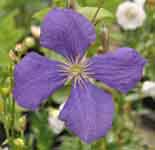 The Jackman Nursery was founded by William
Jackman (1763-1840) in 1810 on 50 acres of land at St.
Johns, Woking, Surrey,
England. His son, George Jackman,
became a renowned
clematis hybridizer. The specific epithet, jackmanii,
as in
Clematis
x jackmanii was named for him. The Jackman Nursery was founded by William
Jackman (1763-1840) in 1810 on 50 acres of land at St.
Johns, Woking, Surrey,
England. His son, George Jackman,
became a renowned
clematis hybridizer. The specific epithet, jackmanii,
as in
Clematis
x jackmanii was named for him.
George Jackman II (1837-1887) followed his father in the
nursery business which sold a wide range of plant material
in addition to the famous clematis cultivars.

|
|
|
|
 |
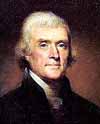
In addition to the many hats the
third President of the
United States wore as architect, statesman
and
politician, he was also an agriculturist,
horticulturist, and landscape designer. After designing several
estates for friends, he eventually designed his own home landscape at Monticello.
 In
his designs, Jefferson fused the elements of neo-classicism, such
as terraces and symmetrically curved paths, with elements he
learned about from his tours of English landscapes--the natural
vistas combined with informal shrub and flowers beds. In
his designs, Jefferson fused the elements of neo-classicism, such
as terraces and symmetrically curved paths, with elements he
learned about from his tours of English landscapes--the natural
vistas combined with informal shrub and flowers beds.
Throughout, and to the end of his life, Jefferson was a devoted
gardener and landscaper. He once wrote, "Though an old man, I am
but a young gardener." In 1811 he wrote, "No occupation is so
delightful to me as the culture of the earth, and no culture
comparable to that of the garden."
He was also the force behind
the
Lewis and Clark
expedition which, as a by product of the journey of discovery,
introduced many previously unknown plant species to the East
coast of the United States.
The species,
Jeffersonia
diphylla aka Twinleaf is named for him.
|
|
|
|
 |
Scottish botanist and explorer
who collected plants and seeds in
Oregon and
California in the
United States.
He disappeared in 1852 on a trip from San Diego across the Colorado Desert and was never seen again.
The species of pine,
Pinus jeffreyi,
is named for him.
|
|
|
|
 |
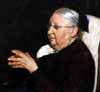 Gertrude
Jekyll's book 'Wood and Garden' (1899) had an enormous
influence on the English (and hence the world's) attitude toward
landscape
gardens. She saw beauty in natural effects. Gertrude
Jekyll's book 'Wood and Garden' (1899) had an enormous
influence on the English (and hence the world's) attitude toward
landscape
gardens. She saw beauty in natural effects.
She collaborated in
garden design with architect
Sir
Edwin Lutyens whom she first met in 1889 ". . . at a tea table,
the silver kettle and the conversation reflecting
rhododendrons, .
. ." as Lutyens described it.
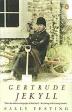 She is
most closely associated with the garden at
Bois des
Moutiers, near Dieppe,
France and Hestercombe in Somerset,
England.
Her planting designs were used at Broughton Castle in Oxfordshire,
Manor House Upton Grey, Lindisfarne Castle in Northumberland,
Hatchlands in Surrey and Knebworth in Hertfordshire. She is
most closely associated with the garden at
Bois des
Moutiers, near Dieppe,
France and Hestercombe in Somerset,
England.
Her planting designs were used at Broughton Castle in Oxfordshire,
Manor House Upton Grey, Lindisfarne Castle in Northumberland,
Hatchlands in Surrey and Knebworth in Hertfordshire.
She is recognized as one of the
greatest influence in the 20th century on the design of herbaceous
gardens. Known for her use of flowers and color in garden designs,
she also used them in woodlands, herbaceous borders, and
water gardens.
Planned graduations of color are particularly evident in her
designs.
Plants associated with her
include
Helleborus foetidus 'Miss Jekyll's Scented',
Lavandula angustifolia 'Munstead',
Nigella damascena
'Miss Jekyll',
Pulmonaria angustifolia 'Munstead Blue',
Sedum telephium 'Munstead Red',
Solenostemon
'Gertrude Jekyll' and
Vinca minor
forma alba 'Gertrude
Jekyll'.
|
|
|
|
 |
 Jellicoe
is joint author with J.C. Shepherd of the classic Italian
Gardens of the Renaissance. His other books include The Landscape
of Man (1975) and Baroque Gardens of Austria. Jellicoe
is joint author with J.C. Shepherd of the classic Italian
Gardens of the Renaissance. His other books include The Landscape
of Man (1975) and Baroque Gardens of Austria.
 Sir
Geoffrey's designs were used at Ditchley Park, Sandringham, Sutton
Place in Surrey, Shute House in Dorset, Cliveden (rose garden) in
Buckinghamshire, Cottesbroke Hall in Northamptonshire, Mottisfont
Abbey in Hampshire,
England and the Moody Historical Gardens in
Texas. He
created the Kennedy Memorial at Runnymede and the fine canal at
the Royal Horticultural Society
Garden at Wisley. Sir
Geoffrey's designs were used at Ditchley Park, Sandringham, Sutton
Place in Surrey, Shute House in Dorset, Cliveden (rose garden) in
Buckinghamshire, Cottesbroke Hall in Northamptonshire, Mottisfont
Abbey in Hampshire,
England and the Moody Historical Gardens in
Texas. He
created the Kennedy Memorial at Runnymede and the fine canal at
the Royal Horticultural Society
Garden at Wisley.
|
|
|
|
 |
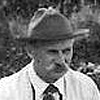 Born
in Denmark, Jensen became a renowned landscape architect in
the
United States. He designed Columbus Park in Chicago and
the park system of Racine,
Wisconsin. Born
in Denmark, Jensen became a renowned landscape architect in
the
United States. He designed Columbus Park in Chicago and
the park system of Racine,
Wisconsin.
His major contribution to landscaping was
the refinement of the use of plant masses in a "prairie
style" of design that lent itself to a more informal or
"natural" effect in the landscape. He also advocated using
existing trees and shrubs on a property as an indicator of
existing soil conditions and to use these as a reference in
selecting plants for a site.
|
|
|
|
 |
 He
was the creator of the Hidcote Manor
Garden in Gloucestershire,
England and originator of various plant varieties
including
Verbena 'Lawrence Johnston' and
Hypericum
'Hidcote'. He
was the creator of the Hidcote Manor
Garden in Gloucestershire,
England and originator of various plant varieties
including
Verbena 'Lawrence Johnston' and
Hypericum
'Hidcote'.
Major Johnston was born in
Paris of an English mother and American
father. He personally collected many plants from
Africa and
China
on a plant expedition in the 1920s.
|
|
|
|
 |
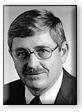 Dr
Samuel B. Jones Jr. (1933-2016) was a botany professor at the
University of Georgia. He and his wife, Carleen opened Picadilly
Farm Nursery and Gardens in the early 1980s. They specialized in
hellebores (Lenton Rose) but also carried many other types of
plants. In 2005, they were awarded the Perennial Plant
Association Award of Merit. The hosta species
H. jonesii is named in his honor. Dr
Samuel B. Jones Jr. (1933-2016) was a botany professor at the
University of Georgia. He and his wife, Carleen opened Picadilly
Farm Nursery and Gardens in the early 1980s. They specialized in
hellebores (Lenton Rose) but also carried many other types of
plants. In 2005, they were awarded the Perennial Plant
Association Award of Merit. The hosta species
H. jonesii is named in his honor.
|
|
|