Comments
from Mr. PGC: Throughout
history, many people have made lasting contributions to the
world of plants. In these pages, we hope to pay tribute to
some of them. Our concentration will be primarily on those
who have introduced plants to the gardening world, those who
have helped spread the word about gardening and those who
have made significant contributions to landscaping and
landscaping design around the world.
This list will be constantly growing as we add
new names. If you have someone who you think should be on
the list, please send us an
Email.
|
|
 |
 |
|
|
 |
|
Jim
Crockett |
|
|
|
 |
 In 1930, Percy Cane
founded and began to edit the quarterly journal, Garden Design. His
landscape designs included
Dartington Hall at Totnes, Falkland Palace in Fife,
Hascombe Court at Godalming, Hungerdown House at Seagry and many
other places including the palace grounds at Addis Ababa, Ethiopia. In 1930, Percy Cane
founded and began to edit the quarterly journal, Garden Design. His
landscape designs included
Dartington Hall at Totnes, Falkland Palace in Fife,
Hascombe Court at Godalming, Hungerdown House at Seagry and many
other places including the palace grounds at Addis Ababa, Ethiopia.

|
|
|
|
 |
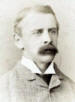
British government counsel to
China
(1867) who, on a trip to
Korea in 1883, collected a specimen of
Viburnum carlessii (Koreanspice
Viburnum) which was
then introduced into the West.
|
|
|
 |
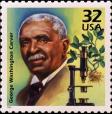 Agricultural
chemist, Carver discovered three hundred uses for peanuts and
hundreds more uses for soybeans, pecans and
sweet potatoes. He
pursued his education at Iowa Agricultural College (now Iowa
State University), where he earned a Bachelor of Science degree
in 1894 and a Master of Science degree in bacterial botany and
agriculture in 1897. Carver became a member of the faculty of
the Iowa State College of Agriculture and Mechanics (the first
black faculty member for Iowa State College). Agricultural
chemist, Carver discovered three hundred uses for peanuts and
hundreds more uses for soybeans, pecans and
sweet potatoes. He
pursued his education at Iowa Agricultural College (now Iowa
State University), where he earned a Bachelor of Science degree
in 1894 and a Master of Science degree in bacterial botany and
agriculture in 1897. Carver became a member of the faculty of
the Iowa State College of Agriculture and Mechanics (the first
black faculty member for Iowa State College).
|
|
|
|
 |
British naturalist who visited America
twice and is credited with first identifying the flowering
dogwood,
Cornus florida. He is credited with
introducing
Stewartia to
England
and has several plants
named after him including
Trillium catesbyi and
Sarracenia x catesbyi.
|
|
|
|
 |
The term "Cattleya"
has long been associated with one of the more popular genera
of orchids. That genus was named after Sir William Cattley
who was a prominent British merchant and horticulturist. He
was heavily involved as a plant collector and financer of
plant collection expeditions by others.
|
|
|
|
 |
|
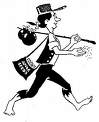 For nearly half a
century in the early 1800's Chapman roamed what is now the
Midwest of the United States establishing nurseries for fruit trees. He would find a
good growing spot and clear away the brush and plant apple seeds
in rows. Some of the nurseries were small while others were
several acres in size. When settlers from the East moved to
these areas, they found apple trees ready for sale for their
home orchards. He became a folk legend and was called either the
Apple Tree Man or Johnny Appleseed. For nearly half a
century in the early 1800's Chapman roamed what is now the
Midwest of the United States establishing nurseries for fruit trees. He would find a
good growing spot and clear away the brush and plant apple seeds
in rows. Some of the nurseries were small while others were
several acres in size. When settlers from the East moved to
these areas, they found apple trees ready for sale for their
home orchards. He became a folk legend and was called either the
Apple Tree Man or Johnny Appleseed.
|
|
|
|
 |
|
|
|
|
|
 |
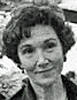 Beth
Chatto was a renowned gardener, writer and plantswoman from
England. She received numerous awards for her writing and
horticultural efforts. In 2002, she was given the Order of
the British Empire (OBE) by Queen Elizabeth. Her exhibits at
the
Chelsea Flower Show earned ten Gold Medals. Beth’s
garden is internationally known and is open to the public. Beth
Chatto was a renowned gardener, writer and plantswoman from
England. She received numerous awards for her writing and
horticultural efforts. In 2002, she was given the Order of
the British Empire (OBE) by Queen Elizabeth. Her exhibits at
the
Chelsea Flower Show earned ten Gold Medals. Beth’s
garden is internationally known and is open to the public.
|
|
|
|
 |
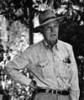 Church
believed gardens should have a more human scale as opposed to the
grandiose dimensions of the estate gardens common at the time. He designed over 2,000
residential gardens
mostly in his
home state of California including public gardens at the
University of California at Berkeley and at
Stanford University
in Palo Alto.
Church also
helped to design Longwood Gardens near Philadelphia,
Pennsylvania. Church
believed gardens should have a more human scale as opposed to the
grandiose dimensions of the estate gardens common at the time. He designed over 2,000
residential gardens
mostly in his
home state of California including public gardens at the
University of California at Berkeley and at
Stanford University
in Palo Alto.
Church also
helped to design Longwood Gardens near Philadelphia,
Pennsylvania.
|
|
|
|
 |
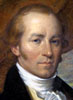 Clark
and
Captain Meriwether Lewis explored the
American West in
1804-05 on assignment from President
Thomas
Jefferson. After returning from their adventure, Lewis named a genus of annual flowers, Clarkia,
after him. Clark
and
Captain Meriwether Lewis explored the
American West in
1804-05 on assignment from President
Thomas
Jefferson. After returning from their adventure, Lewis named a genus of annual flowers, Clarkia,
after him.
They also identified many other plants including
Mahonia
aquifolium (Oregon grape holly),
Gaillardia (blanketflower)
and
Symphoricarpos albus (snowberry) on their
journey and brought them back to the East coast of the
United States.
|
|
|
|
 |
American botanist for
whom the genus,
Claytonia (Spring Beauty), was named.
This plant genus includes some 26 species and is part of the
Portulacaceae
family. Most, but not all of the species are
native to
North America.
|
|
|
|
 |
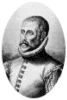 Clusius was a Flemish
doctor and botanist who planned
Europe's earliest botanic garden,
Hortius Botanicus in Leiden, Holland. As Prefect of the Royal
Medicinal Garden in Prague, he started a collection of
tulips from
seed. He subsequently became Prefect of the botanic garden in
Holland and over six hundred tulips
were planted at
Leiden
by 1593. They were some of the earliest introductions of
that species into the
Netherlands. Clusius was a Flemish
doctor and botanist who planned
Europe's earliest botanic garden,
Hortius Botanicus in Leiden, Holland. As Prefect of the Royal
Medicinal Garden in Prague, he started a collection of
tulips from
seed. He subsequently became Prefect of the botanic garden in
Holland and over six hundred tulips
were planted at
Leiden
by 1593. They were some of the earliest introductions of
that species into the
Netherlands.
|
|
|
|
 |
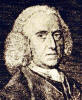 In the
middle 18th century, Collinson, a merchant in London,
made contact with
John Bartram,
a noted horticulturist and plant hunter from near
Philadelphia,
Pennsylvania. Through their long-term
friendship, many, many native American plants were
imported into
England. In the
middle 18th century, Collinson, a merchant in London,
made contact with
John Bartram,
a noted horticulturist and plant hunter from near
Philadelphia,
Pennsylvania. Through their long-term
friendship, many, many native American plants were
imported into
England.
As a result of
these efforts, he was named as a Fellow of the
Royal
Horticultural Society.
|
|
|
|
 |
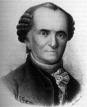 French
botanist credited with discovering around 3,000 species of
plants in his expeditions around the world. He named the
genus,
Bougainvillea, after
Louis-Antoine de Bougainville, the Captain of one of the
ships on an expedition. French
botanist credited with discovering around 3,000 species of
plants in his expeditions around the world. He named the
genus,
Bougainvillea, after
Louis-Antoine de Bougainville, the Captain of one of the
ships on an expedition.
|
|
|
 |
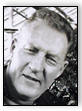 Dr.
John L. Creech was the Director of the U.S. National
Arboretum from 1973 to 1980. Earlier in his career, he was a
plant explorer who spent time in Japan and several other
countries in search of new ornamental plants. He is credited
with sending hosta seeds to noted hostaphiles including
Gus Krossa and named one cultivar for himself, H. ‘Creech’. Dr.
John L. Creech was the Director of the U.S. National
Arboretum from 1973 to 1980. Earlier in his career, he was a
plant explorer who spent time in Japan and several other
countries in search of new ornamental plants. He is credited
with sending hosta seeds to noted hostaphiles including
Gus Krossa and named one cultivar for himself, H. ‘Creech’.
|
|
|
|
 |
 Original
host of "Crockett's Victory Garden" on public television beginning
April 16, 1975. The show is now called "The Victory
Garden". The "Victory Garden" concept was based on
the small backyard vegetable gardens that were encouraged during
the food rationing that occurred because of World War II.
Crockett was raised on a
fruit farm and graduated from the
Stockbridge School of Agriculture at the University of
Massachusetts Original
host of "Crockett's Victory Garden" on public television beginning
April 16, 1975. The show is now called "The Victory
Garden". The "Victory Garden" concept was based on
the small backyard vegetable gardens that were encouraged during
the food rationing that occurred because of World War II.
Crockett was raised on a
fruit farm and graduated from the
Stockbridge School of Agriculture at the University of
Massachusetts
He wrote three books of gardening advice
including Crockett's Victory Garden, Crockett's
Indoor Garden and Crockett's Flower Garden.
After his retirement, he was
replaced as host of the show by
Bob Thomson.
|
|
|
 |
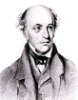 On behalf of
the
Royal
Botanical Gardens at Kew near London,
Cunningham explored
Australia,
Brazil and
New Zealand. He was a type of "Johnny Appleseed" who was
known for spreading the
seeds of fruit trees wherever he traveled. He eventually became
Superintendent of Sydney Botanic Garden. On behalf of
the
Royal
Botanical Gardens at Kew near London,
Cunningham explored
Australia,
Brazil and
New Zealand. He was a type of "Johnny Appleseed" who was
known for spreading the
seeds of fruit trees wherever he traveled. He eventually became
Superintendent of Sydney Botanic Garden.
Many plants associated with him
contain the name cunninghamii including
Araucaria
cunninghamii,
Eucalyptus cunninghamii, Nothofagus cunninghamii,
Olea cunninghamii,
Banksia cunninghamii,
Corchorus cunninghamii,
Podocarpus cunninghamii, and Zehneria cunninghamii.
|