Comments
from Mr. PGC: Throughout
history, many people have made lasting contributions to the
world of plants. In these pages, we hope to pay tribute to
some of them. Our concentration will be primarily on those
who have introduced plants to the gardening world, those who
have helped spread the word about gardening and those who
have made significant contributions to landscaping and
landscaping design around the world.
This list will be constantly growing as we add
new names. If you have someone who you think should be on
the list, please send us an
Email.
|
|
|
 |
 |
|
|
 |
|
John
Tradescant |
|
|
|
|
 |
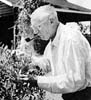 Best known for his Taylor’s Garden Encyclopedia which was
originally published in the mid-1930’s, he was the botanical
editor for Webster’s New International Dictionary (ca
1945) and the American Heritage Dictionary (ca 1960).
Taylor was born in Hereford,
England
in 1883 and came to America
in 1889. Best known for his Taylor’s Garden Encyclopedia which was
originally published in the mid-1930’s, he was the botanical
editor for Webster’s New International Dictionary (ca
1945) and the American Heritage Dictionary (ca 1960).
Taylor was born in Hereford,
England
in 1883 and came to America
in 1889.
As
a museum assistant at the
New York Botanical Garden, he
accompanied various plant collectors on expeditions around the
world. During the beginning years of the
Brooklyn Botanical
Garden, Taylor was Curator of Plants and helped lay out the
grounds of the facility. During this time, he was named editor
of the Journal of the International Garden Club. His
publisher, Houghton-Mifflin, continues to issue a series of
books under the name Taylor’s Guides.

|
|
|
|
 |
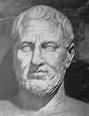
He
was a student of Aristotle in ancient Greece and is often
considered the father of botany. He traveled extensively through
Asia Minor collecting and describing plants.
Velvetleaf,
Abutilon theophrasti, is named in his honor.
|
|
|
|
 |
 Thomas was a gardener, botanist, author and
illustrator as well as a noted nurseryman in Berkshire and
Hampshire,
England. He was a long time garden advisor to the
National Trust which operates many of the great, historical
gardens in the
U.K. Thomas was a gardener, botanist, author and
illustrator as well as a noted nurseryman in Berkshire and
Hampshire,
England. He was a long time garden advisor to the
National Trust which operates many of the great, historical
gardens in the
U.K.
Plants associated with his name include
Lonicera periclymenum 'Graham Thomas',
Rhododendron
'Graham Thomas', and
Eryngium bourgattii Graham Stuart
Thomas's selection.
|
|
|
|
 |
 Former
host of "The Victory Garden" on public television for 12 years
from 1979 to 1991. Died at the age of 74 of the affects of
Alzheimer's disease on October 2, 2003. Former
host of "The Victory Garden" on public television for 12 years
from 1979 to 1991. Died at the age of 74 of the affects of
Alzheimer's disease on October 2, 2003.
He and his wife Betty ran Thomson's Nursery and Garden Center in
Danvers,
Massachusetts from 1954 to 1988. Thomson wrote a garden
column for the Boston Herald and was a well-known gardening
radio personality for three decades before he was tapped to host
"The Victory Garden," television show. Bob hosted the show on WGBH in Boston for 12 years, taking over for the original host,
James
Crockett.
|
|
|
|
 |
 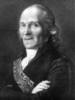 A
student of
Linnaeus,
Thunberg was a medical doctor, botanist and plant explorer
traveling with the Dutch East India Company. In addition to
Japan, he explored parts of
Africa and other regions of
Asia for new plants to bring back to
Europe. Later
in life, he was a professor at the University of Upsala
succeeding Linnaeus. A
student of
Linnaeus,
Thunberg was a medical doctor, botanist and plant explorer
traveling with the Dutch East India Company. In addition to
Japan, he explored parts of
Africa and other regions of
Asia for new plants to bring back to
Europe. Later
in life, he was a professor at the University of Upsala
succeeding Linnaeus.
He wrote the classic book on Japanese plants, "Flora Japonica"
which was published in 1784.
Thunberg is credited
with introducing
Rosa rugosa from Japan to Europe.
Thunberg visited
Japan in 1775 and sent herbarium specimens back to Sweden
which included some of the first
Hosta plants
such as H. 'Lancifolia'
and H. 'Undulata'.
Plants associated with his name include the genus,
Thunbergia,
and species such as:
- Allium thunbergii
- Astilbe thunbergii
-
Berberis thunbergii
- Fritillaria
thunbergii
- Hemerocallis thunbergii
|
|
|
|
|
|
 |
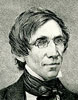
American botanist whose
name is associated with the genus, Torreya, which a
genus including about six species. The California
nutmeg, Torreya californica, is named for him.
|
|
|
|
 |
 The Tradescants were
from East Anglia,
England
although they were of Dutch
origin. The father's name is chiefly associated
with the village of Hatfield, and he ventured abroad to buy
fruit trees. His name is
particularly connected with Tradescant's Cherry which is shown
in the collection of paintings of fruits known as 'Tradescant's
Orchard', located in the Bodleian Library at
Oxford. The Tradescants were
from East Anglia,
England
although they were of Dutch
origin. The father's name is chiefly associated
with the village of Hatfield, and he ventured abroad to buy
fruit trees. His name is
particularly connected with Tradescant's Cherry which is shown
in the collection of paintings of fruits known as 'Tradescant's
Orchard', located in the Bodleian Library at
Oxford.
The father and son are both honored
by the specific epithet of tradescantii and the
genus,
Tradescantia (Spiderwort). Plants with this
in their name include:
Symphyotrichum tradescantii,
Aster tradescantii,
Tradescantia ohiensis,
Tradescantia virginiana,
Tradescantia fluminensis,
Tradescantia
x andersoniana,
and
Tradescantia paludosa.
Plants that they introduced into
Europe include Pistacia terebinthus (turpentine tree),
Liriodendron tulipifera (tulip tree),
Acer rubrum
(red maple) and
Taxodium distichum (swamp cypress).
|
|
|
|
 |
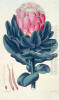 In 1812, the Austrian botanist
and artist, Trattinick,
named the genus,
Hosta, in honor of his countryman and botanist,
Nicholas
Thomas Host. In 1812, the Austrian botanist
and artist, Trattinick,
named the genus,
Hosta, in honor of his countryman and botanist,
Nicholas
Thomas Host.
|
|