Comments
from Mr. PGC: Throughout
history, many people have made lasting contributions to the
world of plants. In these pages, we hope to pay tribute to
some of them. Our concentration will be primarily on those
who have introduced plants to the gardening world, those who
have helped spread the word about gardening and those who
have made significant contributions to landscaping and
landscaping design around the world.
This list will be constantly growing as we add
new names. If you have someone who you think should be on
the list, please send us an
Email.
|
|
 |
 |
|
|
 |
|
John Rodgers |
|
|
|
|
 |
 Dr.
James Chester Raulston was the founder, director and
namesake of the J.C. Raulston Arboretum in Raleigh, North
Carolina. He traveled around the world with plant collecting
trips to Europe and Korea and was credited with introducing
many new species and cultivars of plants into the trade. Dr.
James Chester Raulston was the founder, director and
namesake of the J.C. Raulston Arboretum in Raleigh, North
Carolina. He traveled around the world with plant collecting
trips to Europe and Korea and was credited with introducing
many new species and cultivars of plants into the trade.
He received the prized Thomas Roland Medal, given by the
Massachusetts Horticulture Society. Other honors for his
work, included the Outstanding Public Garden Program Award
from the American Association of Botanic Gardens and
Arboreta in 1992. Raulston was the author, with Kim E.
Tripp, of ''The Year in Trees: Superb Woody Plants for
Four-Season Gardens,'' published in 1995 by Timber Press.
He was killed in a car accident in December, 1996.

|
|
|
|
 |
 Repton succeeded 'Capability' Brown as head gardener at
Hampton Court
Palace in
England, and
was the first to assume the title of landscape gardener. Like
Brown, he was noted for "destroying" many older style,
formal gardens in
order to create large, open landscapes. He was the author of
Observations on the Theory and Practice of Landscape Gardening
(1803). Repton succeeded 'Capability' Brown as head gardener at
Hampton Court
Palace in
England, and
was the first to assume the title of landscape gardener. Like
Brown, he was noted for "destroying" many older style,
formal gardens in
order to create large, open landscapes. He was the author of
Observations on the Theory and Practice of Landscape Gardening
(1803).
His designs were used at Antony House, Bowood, Clumber Park,
Hatchlands, Plas Newydd, Sheffield Park, Sheringham Park
(Norfolk), Tatton Park and Wimpole Hall.
|
|
|
|
 |
Mary Richards
was born in Wales and married Major Henry Richards in 1907.
In 1951, at the age of 65, she made her first visit to the
African country of Northern Rhodesia (now
Zambia) to visit a friend. She was encouraged to collect
plant specimens for the
Royal
Botanic Gardens at Kew for their
herbarium. Over the years until 1974, she pursued this with
a passion and sent over 29,000 pressed and dried plant
specimens to Kew. She also has an herbarium of plants from
Wales that is contained at the National Museums and
Galleries of Wales in Cardiff.
|
|
|
|
 |
French royal gardener
and botanist for King Henry IV
for whom the genus,
Robinia (Black Locust trees), is named.
His son, Vespasieu Robin, was also a botanist who succeeded
his father and lectured on botany at the
Jardin Royal in Paris.
|
|
|
|
 |
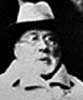
Born in
Ireland, he was the leader of the new landscape school of
gardening. He and his followers turned parks into gardens and taught the nation to
appreciate hardy plants and herbaceous borders at their true
value.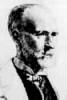
William Robinson's The English Flower Garden of 1883 was
reprinted almost annually for over 25 years, while a whole
generation of gardeners absorbed his outspoken rejection of
Victorian fussiness and formality. Earlier (1870) he published
Alpine Flowers for Gardens and The Wild Garden.
His designs were used at Emmetts, his own home Gravetye Manor
(West Sussex), Killerton House and Nymans Gardens. There is a so-called "Robinsonian"
garden at the
Mt Usher Gardens in Ireland.
The plant
Anemone nemorosa
'Robinsoniana' is named for him.
|
|
|
|
 |
Irish gardener, landscape designer and
plantsman. The specific epithet, robinsonianus, was
named for him. Plants with this name include
Calamus robinsonianus,
and
Senecio robinsonianus.
|
|
|
|
 |
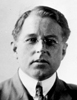 Born in Vienna, Austria, Joseph Rock collected for the
Arnold Arboretum,
in Boston, Massachusetts, which he described as
"a garden of Eden". Most of his activity in plant
collection came in
Southeast
Asia. A mountain ash cultivar,
Sorbus x 'Joseph Rock', bears his
name. Born in Vienna, Austria, Joseph Rock collected for the
Arnold Arboretum,
in Boston, Massachusetts, which he described as
"a garden of Eden". Most of his activity in plant
collection came in
Southeast
Asia. A mountain ash cultivar,
Sorbus x 'Joseph Rock', bears his
name.
|
|
|
|
 |
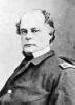
John Rodgers was an
Admiral in the US Navy in the 1850s. He was in command of
the ship that took plant explorers to
Asia when they found
the plant now known as
Rodgersia podophylla.
Asa Gray, the
famous botanist named the then unknown genus,
Rodgersia
in the Admiral's honor.
|
|
|
|
 |
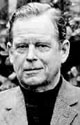
An American garden designer whose designs were used at the
formal gardens at the
Royal
Horticultural Society
garden at
Wisley, Claverton Manor,
Fairfield House, and the herb garden at Scotney Castle in Kent,
England.
|
|
|
|
 |
Irish astronomer whose
name was lent to the genus,
Romneya. Also known
as the Matilija poppy, it is a tall (6 to 8 feet), majestic
plant. Its large white crepe-paper-like flowers have large
yellow centers.
|
|
|
|
 |
John Rose studied under
Le Nôtre.
In 1666, he succeeded André Mollet as head of the royal gardens at
St James Park in London.
John Rose's name is chiefly associated with viticulture following
publication of his
book, The English Vineyard Vindicated,
which became a standard work in the field. Rose's name is also associated with
pineapples which he grew in a greenhouse for the King of
England.
|
|
|
|
 |
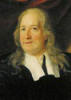 Professor of
medicine at Uppsala University and an avid botanist, Rudbeckius
taught renowned taxonomist,
Carl Linnaeus
who honored him by naming the genus,
Rudbeckia (Black
Eyed Susan), for him. Professor of
medicine at Uppsala University and an avid botanist, Rudbeckius
taught renowned taxonomist,
Carl Linnaeus
who honored him by naming the genus,
Rudbeckia (Black
Eyed Susan), for him.
|
|
|
|
 |

|
|
|
|
 |
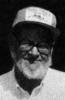
George Russell of
York,
England, a railroad crossing guard and
home gardener, developed the Russell Hybrid
lupines by
improving on the common blue and white lupine.
He began a breeding project at age 54 and by the
time he was 75, his seedlings were renowned
throughout the U.K.
Russell kept no records, consequently, the exact
parentage of this group is unknown. The Russell
Hybrids are by far the showiest and most popular
of the many types of lupines. They are 3-4 feet tall with pea-like flowers of every color
imaginable.
The first Russell
Hybrid Lupines were displayed at the
Royal
Horticultural Society
show in 1937 with the help of nurseryman, James Baker. They won
many prizes and become very popular with the gardening public
thereafter. Bakers Nurseries of Codsall, Wolverhamton once grew
as many as 40 acres of the plants which drew many visitors for
viewing each year.
|
|